The INDIA bloc held a symbolic “public impeachment” hearing against Chief Election Commissioner Gyanesh Kumar at Congress president Mallikarjun Kharge’s residence in New Delhi on 31 October 2026. Kharge sought Kumar’s removal, while BJP leaders rejected the exercise and defended electoral-roll revision. The gathering was a political hearing: it did not itself remove the CEC, establish a criminal offence or replace the constitutional process.
This report brings together the linked live coverage from The Hindu, The Economic Times and India Today, alongside the Election Commission’s published position and the relevant legal provisions. The reporting cut-off is 5:50 p.m. IST on 31 October. Developments after that point are not treated as confirmed here.
Where was the hearing held, and who led it?
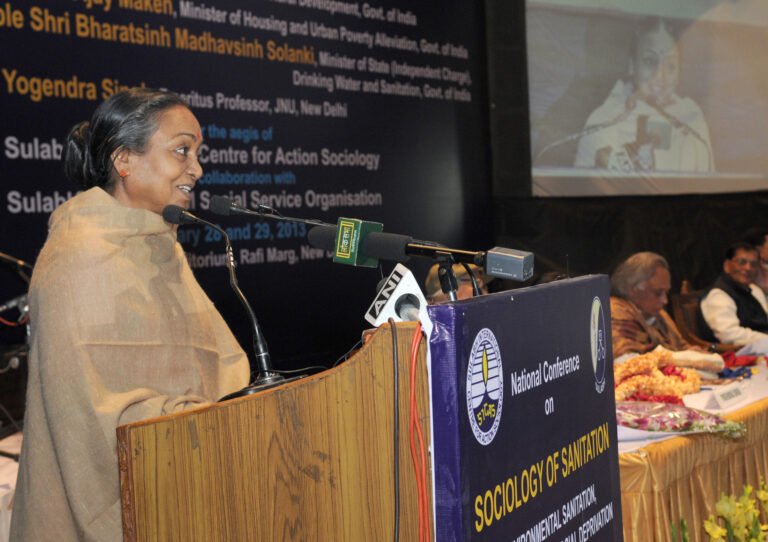
The venue was 10 Rajaji Marg, Kharge’s official residence in New Delhi. Former Lok Sabha Speaker Meira Kumar presided, and Kharge moved the symbolic motion. The Economic Times reported the programme underway around 4 p.m.; other live blogs recorded its opening at slightly different posting times. Those timestamps identify when an outlet published an update, rather than providing an independently synchronised transcript.
The organisers used a parliamentary-style format to present their objections to the Chief Election Commissioner’s conduct. Calling the meeting an impeachment did not make it a sitting of either House. An MP’s participation, or a former Speaker’s presence in the chair, does not transfer Parliament’s statutory powers to a gathering at a residence.
Watch the organisers’ broadcast
The video below is the broadcast titled “LIVE: The Public Impeachment of Gyanesh Kumar | 10 Rajaji Marg, New Delhi”, published on Rahul Gandhi’s YouTube channel. It provides the organisers’ presentation of the proceedings. Statements made in the broadcast should be assessed as the speakers’ claims, with the responses and legal context set out in this report.
Watch the broadcast on YouTube · Rahul Gandhi’s channel.
What were the six charges raised against the CEC?
The Hindu’s live coverage reported a six-part set of allegations displayed at the programme. In summary, the opposition accused Kumar of enabling election manipulation; overseeing large-scale removals from electoral rolls; changing requirements associated with Form 6 without parliamentary approval; centralising control through ECINet; excluding the other Election Commissioners from decisions; and acting under political instructions from the Prime Minister and Home Minister.
These are the opposition’s charges. This report has not independently established them as findings of fact. The allegations also concern different kinds of evidence: individual voter records, the legal authority for forms, software permissions and internal institutional decisions. A single political label does not resolve all of those questions.
Claims about the number of voters affected require particular care. A count of entries classified as absent, shifted, dead or duplicate is not automatically a count of eligible citizens unlawfully disenfranchised. Draft-stage omissions, final deletions, reinstatements and successful applications can describe different stages of the same revision. The source data and the decisions on individual cases are needed to evaluate a numerical claim.
What did Kharge demand?
India Today reported that Kharge demanded Kumar’s immediate removal and called for a treason trial. It also reported his criticism of the protections contained in the 2023 Election Commissioners law. The demand for prosecution was a political demand made at the hearing, not a report that a court had convicted Kumar or that such a trial had begun.
Kharge’s stated argument was that electoral administration should protect the voting rights of legitimate electors. His assertion that the CEC had acted under political direction remains an allegation. The seriousness of that assertion makes the underlying orders, decision records and the Commission’s response essential to any assessment of it.
Why are SIR, Form 6 and ECINet central to the dispute?
Special Intensive Revision, or SIR, concerns the checking and updating of electoral rolls. Form 6 is the application route identified by the Election Commission for new registration. ECINet is the digital system discussed in the Commission’s published account of document handling and official access. The dispute concerns how these administrative mechanisms have been designed and used, rather than simply whether voter lists should ever be updated.
For a voter whose entry is contested, the meaningful record is specific: the earlier roll entry, any verification or notice, the application or objection, the registration officer’s decision and any available appeal. A general claim about a nationwide exercise cannot establish the status of an individual elector. Equally, a general institutional assurance does not answer every documented complaint.
What is the Election Commission’s published position?
In a press note dated 26 September 2026, before this hearing, the Commission said the SIR orders described in that note had unanimous approval. It described role-based access to ECINet and said documents collected by Booth Level Officers would be uploaded for decisions by Electoral Registration Officers. It also announced a review of ECINet’s compliance with the applicable laws and rules.
That press note is relevant institutional context. It is not a newly issued response to every statement made at the 31 October programme. Its publication also should not be reported as an independent judicial finding about each disputed voter entry. A fair assessment should compare a particular allegation with the particular record or explanation that addresses it.
How did the BJP respond?
The Economic Times reported that BJP spokesperson Guru Prakash Paswan accused the opposition of spreading misleading narratives through the exercise. The party’s response contested both the programme’s political framing and the allegation that the revision was being used for electoral manipulation.
The Hindu reported that BJP MP Sambit Patra defended Form 6 and urged people whose names were missing to apply for inclusion. He said an additional declaration was involved while the form itself remained unchanged. That is the BJP’s position on a disputed issue; it should not be confused with the text of a particular rule or a decision on an individual application.
Patra also criticised the event as a misuse of parliamentary symbolism. The central disagreement therefore has two levels: the opposition is demanding accountability for the conduct of electoral administration, while the BJP disputes its claims and the legitimacy of the chosen political spectacle. Neither side’s assertion substitutes for verification of the underlying electoral records.
What did other opposition leaders say?
The Hindu reported that RJD leader Tejashwi Yadav accused the CEC of acting in the BJP’s interests, while TMC MP Saugata Roy said the opposition had followed the procedure for submitting a removal notice but had not been allowed to raise the issue in Parliament. Those accounts establish the positions they expressed, rather than proving the allegations themselves.
India Today reported Shashi Tharoor’s explanation that the programme had been organised outside Parliament because the opposition’s notices had not been admitted by the presiding officers. The distinction between submitting a notice and having it admitted is significant: the first is an initiative by members, while the second is a separate procedural decision. Neither stage by itself constitutes removal.
Can this hearing legally remove the Chief Election Commissioner?
No. Article 324(5) of the Constitution protects the CEC through the removal standard applicable to a Supreme Court judge. Article 124(4) requires the prescribed support in each House of Parliament and a presidential order on the specified grounds. The required support combines a majority of the House’s total membership with at least two-thirds of members present and voting.
Section 11 of the 2023 Act retains the CEC’s removal safeguard. Section 16 separately addresses civil or criminal proceedings concerning acts, things or words done or spoken when acting, or purporting to act, in official duty. The scope and validity of a legal protection are questions for the applicable law and courts; a political description of a lifelong shield is not the complete statutory text.
A public resolution can demand action and seek to influence opinion. It cannot itself exercise the powers assigned to Parliament, the President or a court. A reported demand for removal, prosecution or resignation should therefore remain clearly distinguished from a completed legal outcome.
What happens to the November 1 rally?
The linked reports describe a separate opposition programme planned for Ramlila Maidan on 1 November. The residence hearing and the rally belong to the same political campaign, but they are different events. At this report’s cut-off, the next day’s rally was still a planned programme, not an event whose attendance or outcome could be reported as completed.
Any later report should verify the final arrangements, what actually took place and any official traffic instructions. This article does not present a political attendance forecast as a measured crowd total or reproduce an unverified route as travel guidance.
What should voters check for themselves?
Use the Election Commission’s official electoral-search service to verify your current roll entry. If an entry is missing or wrong, keep the application reference, notice and any written decision, and consult the relevant Electoral Registration Officer or Booth Level Officer. The official Voters’ Service Portal identifies the current forms and application routes.
The ECI’s guidance distinguishes Form 6 for new registration, Form 7 for objections or deletion requests, and Form 8 for corrections, shifting residence and specified voter-card services. Check the current instructions and the applicable local schedule rather than assuming that a deadline reported for another state applies to you.
Frequently asked questions
Was Gyanesh Kumar removed by the public impeachment programme?
No legal removal is established by the linked reports. The programme was a symbolic political hearing, while actual removal requires the constitutional process.
Who chaired the hearing and moved the motion?
Former Lok Sabha Speaker Meira Kumar presided. Congress president Mallikarjun Kharge moved the symbolic motion at his residence at 10 Rajaji Marg, New Delhi.
Did a court find the CEC guilty of treason at this event?
No. Kharge’s reported call for a trial was a demand by a political leader. It was not a court judgment or proof that proceedings had begun.
Where can the full broadcast be watched?
The YouTube video embedded in this report is the organisers’ broadcast on Rahul Gandhi’s channel. A direct link is also provided below it.
Are the hearing and the November 1 Ramlila Maidan rally the same event?
No. They are separate programmes. This report records the hearing on 31 October and describes the following day’s rally as planned at its reporting cut-off.
Sources and reporting notes
The Hindu: live coverage, checked through the 5:46 p.m. update
The Economic Times: opening proceedings, Kharge’s allegations and BJP response
India Today: Kharge’s demand and statements on parliamentary procedure
Election Commission / PIB: published decisions and institutional position, 26 September 2026
Constitution of India: Articles 124 and 324
India Code: 2023 Election Commissioners Act, sections 11 and 16
Election Commission: voter registration and electoral search guidance
Voters’ Service Portal: official forms
Reporting cut-off: 31 October 2026, 5:50 p.m. IST. Original synthesis of the linked reporting and official sources; not an independent transcript or a finding on the allegations.
Image source
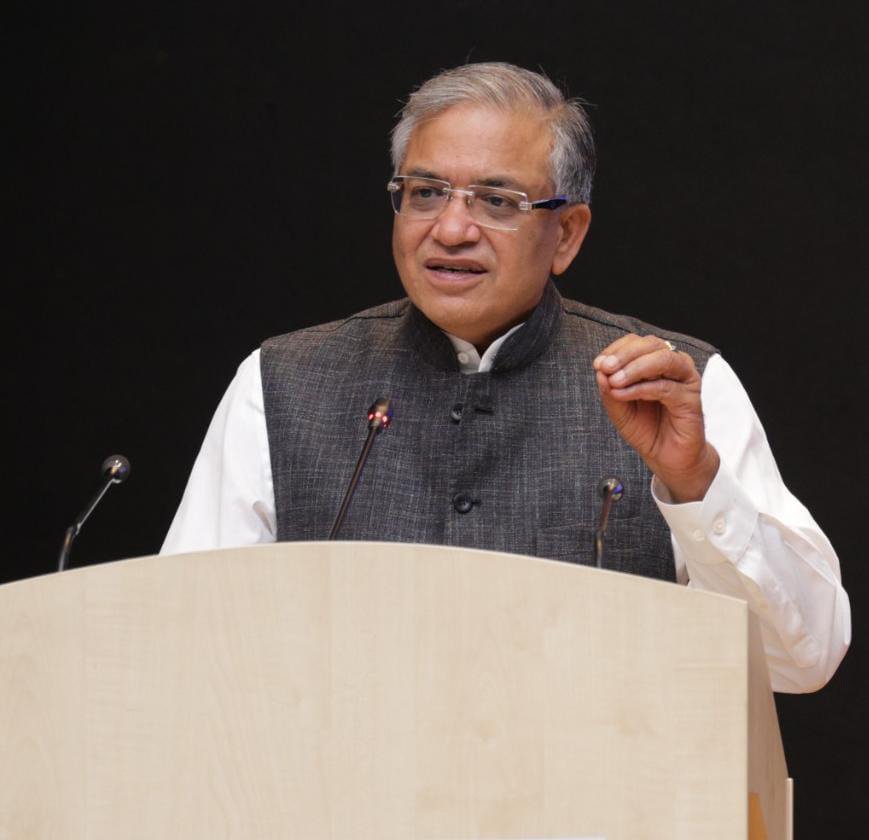
Gyanesh Kumar in June 2025. Archive photograph; not the 31 October 2026 opposition hearing. Photo: Prime Minister's Office / Wikimedia Commons · GODL-India. Display crops may be applied.