Deleted names, family-history checks, Supreme Court questions and the Election Commission’s defence—explained in plain language.
Reporting reviewed through 31 October 2026.
A person registers to vote, appears on the electoral roll and takes part in elections. Then a revision removes their name. To return, they are directed to a form that asks them to declare they are applying for inclusion for the first time. That is the problem at the centre of the Form 6 controversy.
The dispute brings together three questions: were eligible voters wrongly left out, is the restoration process appropriate for people already registered, and did the Election Commission’s online requirements go beyond the prescribed form? The Supreme Court has questioned aspects of the process. The Election Commission of India (ECI) denies unlawfully amending Form 6 and maintains that its Special Intensive Revision decisions were approved collectively. Courtroom questions are not a final judgment establishing wrongdoing.
First, what is Form 6?
Form 6 is the Election Commission’s application for new voters seeking inclusion in an electoral roll. It collects the applicant’s name, age, ordinary residence and supporting documents. Its declaration says the applicant is seeking inclusion for the first time and is not included in any Assembly or Parliamentary constituency’s roll.
That creates the central difficulty for someone who was already registered but disappeared from the revised list: how should an existing elector accurately complete a declaration written for a new applicant? One correction is essential. The wording is about first-time inclusion in the electoral roll, rather than literally declaring that someone has “never voted.” Being registered and actually casting a vote are different things.
What is SIR—and why can a name disappear?
Special Intensive Revision, or SIR, is an exercise to prepare electoral rolls afresh through verification of electors. An accurate roll needs to account for people who have died, moved or appeared more than once. The controversy concerns how authorities distinguish those cases from eligible people who were simply not reached, and how mistakes can be corrected.
The Indian Express reported that registered electors had to submit enumeration forms and that the exercise involved linking records with earlier intensive-revision rolls. Its September 1 report described exclusions from draft rolls, before subsequent claims and corrections. A missing name at the draft stage is serious, but should not automatically be described as permanent loss of voting rights.
The numbers are enormous. What do they actually mean?
Supreme Court Observer’s October 16 explainer reported 13.36 crore deletions, attributing the figure to ECI data. An earlier Indian Express report, dated September 1, recorded 13.37 crore names deleted from draft rolls across the phases covered in its analysis. These figures retain their source, date and scope; neither is a verified count of eligible citizens unlawfully excluded.
Three different measures are needed: names initially excluded, eligible people incorrectly excluded, and eligible people still missing after claims and restoration. The reports reviewed do not provide a reconciled current national total for the last category. Calling every deletion wrongful would overstate the evidence. Treating every deletion as justified would also leave the central dispute unanswered.
Delhi brought the problem into sharp focus
At the October 28 hearing, the Supreme Court examined why people previously listed as Delhi voters were being asked to return through Form 6. Business Standard reported submissions concerning approximately 47 lakh people excluded from the draft roll, including around 43 lakh classified as absent or permanently shifted. These were submissions in the proceedings, not a court-certified count of wrongful deletions.
The bench discussed allowing enumeration forms, using Form 8 where applicable and reaching out to affected electors. ECI counsel said the Commission would examine the concerns and consider remedial measures. Not receiving a form, missing a visit or changing address does not necessarily mean someone has become ineligible to vote. The procedure needs to distinguish those situations.
Form 6 versus Form 8: why the difference matters
Form 6 is for applications by new voters seeking inclusion. The official Form 8 covers shifting residence, correcting an existing entry, replacing an Elector Photo Identity Card (EPIC) or recording disability status. It explicitly provides for shifting registration from an earlier address to the current one.
Consider someone moving from one rented home to another. The practical task is to update their registration accurately. Treating that person as an entirely new applicant raises different questions. However, Form 8 is not an automatic solution for every deleted name. The applicable route depends on whether an entry exists, the reason for exclusion and the directions governing the revision.
Could completing Form 6 lead to prosecution?
The official form warns that a false declaration, made knowingly or without believing it to be true, can attract punishment under Section 31 of the Representation of the People Act, 1950. It specifies imprisonment extending to one year, a fine, or both. This explains the concern about directing previously registered voters into a first-time declaration. It does not establish that every such application automatically becomes a criminal offence.
ThePrint reported that ECI counsel assured the court that people would not be prosecuted for submitting Form 6 despite appearing on the previous roll. The bench nevertheless questioned the mismatch. An assurance about prosecution and a clear, suitable application procedure are different safeguards. The controversy concerns both.
The family-history question: when software becomes the gatekeeper
Scroll reported that online applicants were required to answer whether they, their parents or grandparents appeared in earlier SIR rolls. Reporting described an interface that would not accept submission without an answer. A required digital field can affect who completes an application even when authorities describe the declaration as separate from the statutory form.
For families with incomplete records, migrants and young applicants, locating an old family entry may be difficult. But difficulty supplying ancestry information should not be reported as automatic disqualification unless the applicable rules and evidence establish that result.
What does the Election Commission say?
The ECI’s defence is that it did not amend statutory Form 6. According to IANS’s October 26 report on its affidavit, the Commission described the SIR declaration as a separate document. It said mapping to older rolls could help applicants establish eligibility without additional supporting documents; people unable to supply those links could provide prescribed documents instead.
The Commission explained that the documents appeared together online to allow a single OTP and electronic signature. It referred to separating the online process to align it with physical applications. The legal disagreement is therefore whether the process merely collected an additional declaration or effectively altered access to registration.
Did the Supreme Court approve changes to Form 6?
At the October 5 hearing, Chief Justice Surya Kant was reported as making clear that the court had not approved a modified Form 6 and wanted to examine the records. Approval of a revision exercise cannot simply be treated as approval of every implementation detail. The Indian Express also reported objections by Election Commissioners Vivek Joshi and Sukhbir Singh Sandhu involving the form.
The internal disagreement remains disputed
Bar & Bench reported that a petition highlighted 14 objections recorded over approximately ten months and alleged that collective decision-making had been bypassed. The ECI rejected that characterisation. Its affidavit said the three SIR orders were unanimous and distinguished internal suggestions or queries from formal Commission decisions. It also described electronic approval in urgent cases. Reported objections do not by themselves establish that every disputed action was unlawful.
What changed—and what remains unresolved?
The Tribune reported on September 30 that the declaration requirement was withdrawn outside the ongoing SIR context, while remaining available where the exercise continued. Later reporting described changes to the online presentation. These were developments at different stages, not one blanket nationwide withdrawal.
Outstanding questions concern restoration safeguards, digital requirements and institutional decision-making. A separate October 27 report said challenges concerning the Commission’s functioning were listed for November 17. Those proceedings should not be confused with the Delhi restoration case, which followed its own hearing schedule.
Quick answers
What is the Form 6 controversy in one sentence?
It concerns previously registered voters being directed through a first-time enrolment declaration, alongside challenges to additional online requirements during SIR.
Were 13.36 crore eligible voters proven to have been wrongly removed?
No. That is a reported deletion figure, not a verified national count of wrongful exclusions remaining after restoration.
Does Form 6 literally ask applicants to say they have never voted?
The official form examined asks about first-time electoral-roll inclusion. That differs from whether a person has cast a ballot.
Has the Supreme Court finally declared the disputed changes illegal?
The proceedings reviewed contain questions, challenges and responses. They do not establish a final judgment resolving all these issues.
Should every deleted voter submit Form 8?
No. Form 8 covers specified services for existing electors, including shifting residence. The restoration procedure depends on individual circumstances and applicable directions.
Sources and further reading
Official documents: ECI Form 6 and ECI Form 8.
Supreme Court Observer, October 16; Indian Express, September 1: draft-roll totals; Business Standard, October 28: Delhi hearing; ThePrint: Delhi proceedings.
Scroll, October 6; IANS, October 26: ECI defence; Indian Express, October 6: court clarification; Bar & Bench, October 26; The Tribune, September 30; Indian Express, October 27: related proceedings.
Read our SIR, Form 6 and ECINet voter-check guide · Browse IndianVoter News.
Image source
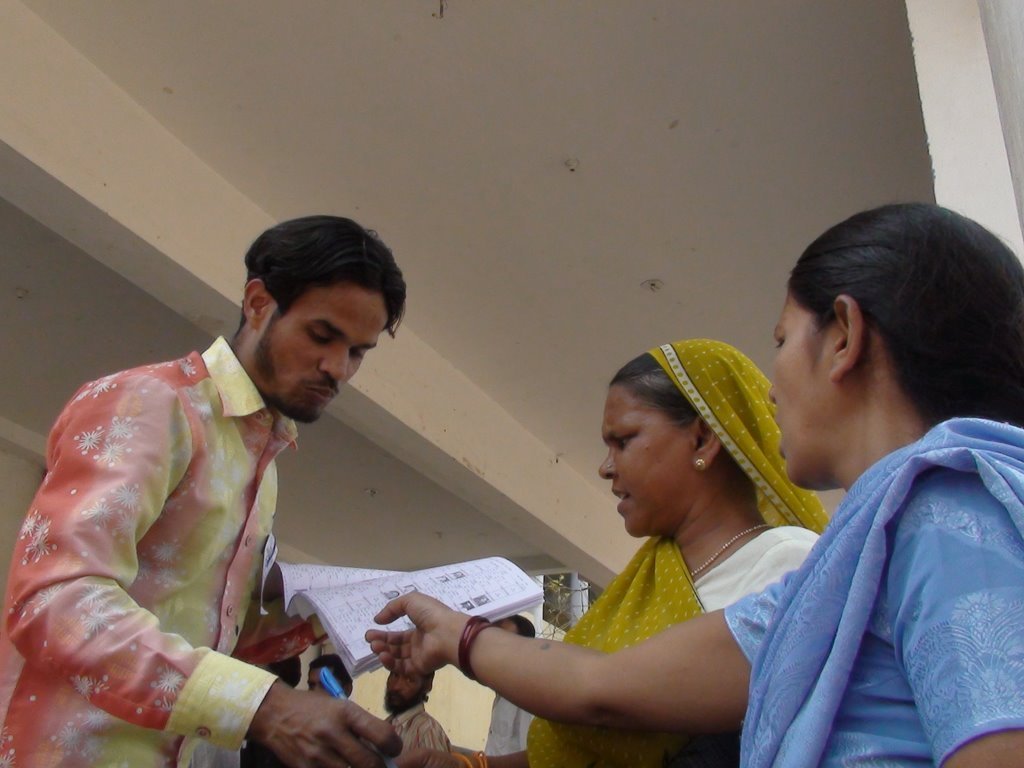
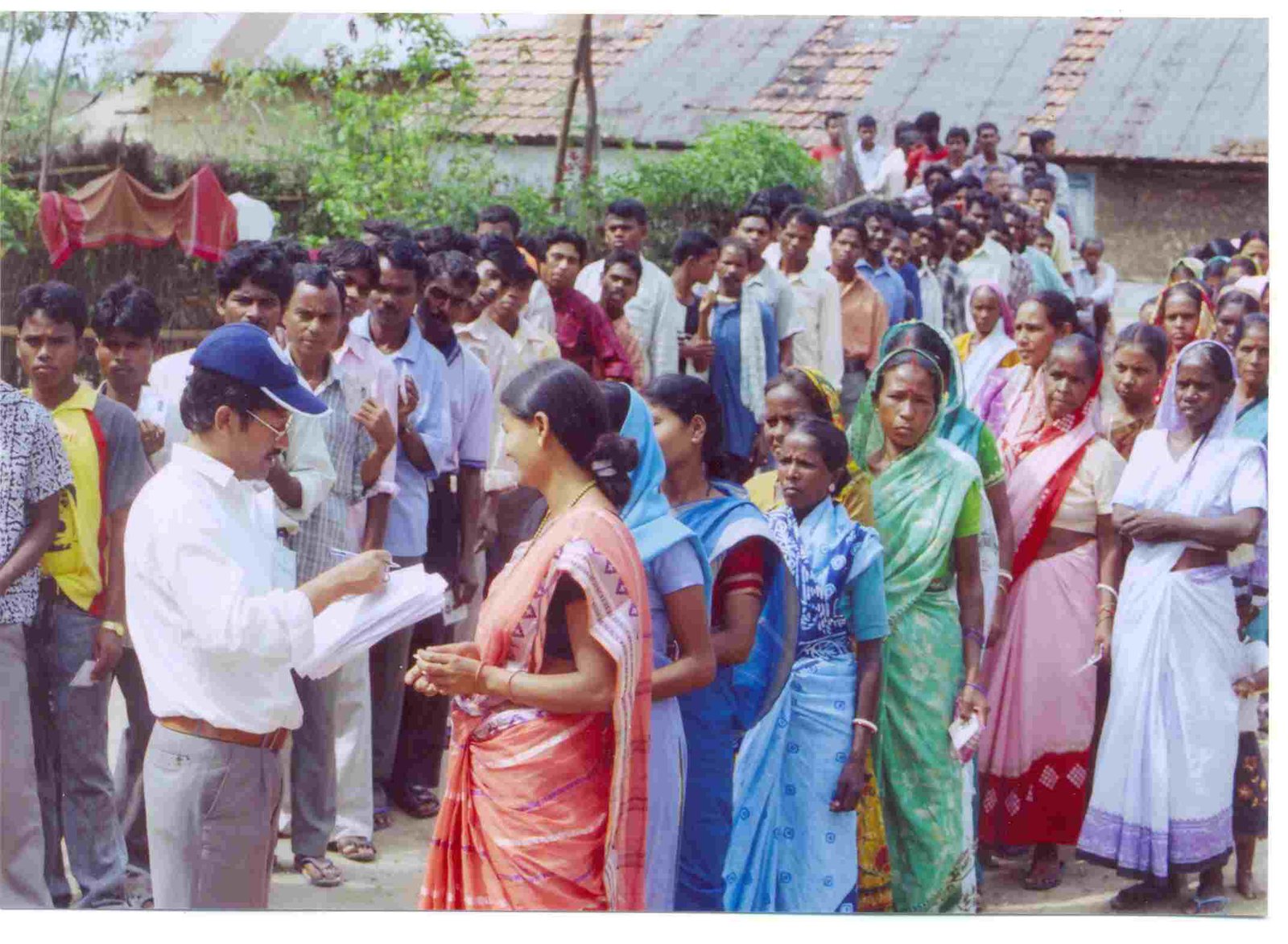
Featured photograph: voter-registration context, photographed on 16 April 2009 by Nilanjan Chowdhury / Al Jazeera English. Original file and rights record, Wikimedia Commons; original Flickr source. Licensed under CC BY-SA 2.0. Archive image; it does not depict the 2026 SIR exercise or court hearing. Display crops and WordPress thumbnail resizing may be applied; adaptations remain under CC BY-SA 2.0.
Image source
Archive photograph, 16 April 2009. Nilanjan Chowdhury / Al Jazeera English, CC BY-SA 2.0. Not the 2026 SIR exercise or court hearing. Photo: Nilanjan Chowdhury / Al Jazeera English. Original image source · CC BY-SA 2.0