Author: aamersiddiqui

  • Ritu Tawde elected Mumbai mayor; Sanjay Ghadi becomes deputy

    Ritu Tawde elected Mumbai mayor; Sanjay Ghadi becomes deputy

    Archive report · 11 February 2026

    BJP corporator Ritu Tawde was declared Mumbai’s mayor on 11 February 2026, with Shiv Sena corporator Sanjay Ghadi named deputy mayor during the inaugural session of the newly elected Brihanmumbai Municipal Corporation House. The announcement established the civic leadership through which the governing alliance would preside over the new council.

    How was the result declared?

    Mid-day reported that municipal commissioner and administrator Bhushan Gagrani presided over the first session of the 227-member elected general body at the civic headquarters. He declared Tawde elected after confirming that only one valid nomination had been received for mayor.

    The same report recorded Ghadi’s selection as deputy mayor. An unopposed election means there was no competing valid nomination for the post at that stage. It should not be confused with an absence of opposition parties in the council or agreement on every subsequent civic decision.

    How does the mayor fit into Mumbai’s government?

    The BMC’s institutional explanation describes the mayor as a councillor elected by the Corporation who presides over its deliberations and represents the city. It distinguishes that role from the municipal commissioner’s executive participation. The new office-holders therefore occupy positions within a wider set of elected bodies and administrative departments.

    A resident’s civic problem may involve a ward office, a department, a committee or the commissioner’s administration. Knowing who chairs the political institution is useful, but it does not mean the mayor personally executes every repair, service contract or statutory decision. Accountability depends on identifying the office responsible for the particular action.

    What should residents watch after the leadership vote?

    The next substantive record is the business conducted by the House: committee formation, questions, budget decisions and resolutions. These provide a way to assess political priorities beyond the ceremony of assuming office. The choice of leadership is an institutional starting point, not proof of delivery on any project.

    Comparing a public promise with the later resolution and departmental action helps separate political intent from implementation. Attendance, debate and recorded voting can also show how the governing alliance and opposition use the council’s powers.

    This article is an archive account of the 11 February leadership election. It does not import later developments into the result or describe subsequent office-holding changes. Readers following a later dispute should check the relevant dated municipal record rather than treat an archive profile as a live roster.

    Quick answers

    Who became mayor on 11 February 2026?

    BJP corporator Ritu Tawde, according to the report of the inaugural session.

    Who became deputy mayor?

    Shiv Sena corporator Sanjay Ghadi.

    Was the mayoral election contested?

    The report said only one valid nomination was received, so Tawde was declared elected unopposed.

    Sources and archive context

    Mid-day, 11 February 2026: the inaugural session and election declaration

    BMC: institutional role of the mayor

    BMC: constitution and conduct of the Corporation

    This archive report reflects the information available on its stated publication date. Proposals, allegations and pending proceedings are described at that stage; later outcomes are not implied.

    More political news from Mumbai · IndianVoter newsroom

    Image source

    Mumbai Municipal Corporation headquarters. Archive venue photograph; not the 11 February 2026 mayoral election. Photo: Kanad Sanyal / Wikimedia Commons · CC BY-SA 4.0. Display crops may be applied.

  • BJP–Shiv Sena alliance crosses Mumbai civic majority mark in January result

    BJP–Shiv Sena alliance crosses Mumbai civic majority mark in January result

    Archive report · 2026-01-20

    The BJP and Eknath Shinde-led Shiv Sena secured a majority in Mumbai’s January 2026 civic election, winning 118 of the BMC’s 227 seats between them. The BJP’s 89 and Sena’s 29 crossed the 114-seat majority threshold. The result changed the elected balance of the corporation; it did not itself complete the separate selection of every civic office-bearer.

    What did the declared tally show?

    The Indian Express’s ward-result account identified the BJP as the largest party with 89 seats and the Shinde-led Sena with 29. It reported that results for all 227 wards were declared after the 15 January polling. These are seat counts, rather than vote shares or the number of all voters supporting an alliance.

    PTI’s result report recorded Shiv Sena (UBT) with 65 seats, Congress with 24 and MNS with six. Those figures show a substantial opposition presence even though the BJP–Sena combination had crossed the majority threshold. A majority does not mean that every ward returned a member of the governing alliance.

    What did the gazette add?

    A 20 January PTI account carried by Rediff said the government had published the elected corporators’ names in a 19 January gazette. The record included affiliations and valid votes. That is a different stage from a live counting update and helps distinguish the declared result from provisional numbers circulating earlier.

    This report uses the consistent principal-party counts across the cited accounts. It does not reproduce unreconciled peripheral figures from a single live or wire account as if they formed a verified complete table.

    What did a majority enable—and what remained separate?

    The arithmetic established the alliance’s position in the elected corporation. The allocation of offices, committee roles and decisions on particular proposals would still require subsequent processes. This archive does not import later mayoral selections or committee disputes into the January result.

    For residents, the practical significance is knowing which parties held the numbers to shape civic decisions and which representatives formed the opposition. Assessing their performance would require looking at later budgets, proceedings and services, rather than assuming an election victory itself delivered those outcomes.

    The historical cut-off is 20 January, after the reported gazette notification. No later defection, legal challenge or change in affiliation is assumed. The article records the election outcome as one distinct city political development, rather than multiplying individual ward wins into separate quota stories.

    Quick answers

    How did the alliance reach 118 seats?

    The reported BJP tally was 89 and Shinde-led Shiv Sena tally was 29.

    What was the majority threshold?

    114 seats in the 227-member corporation.

    Did the result itself decide every civic office?

    No. Selection of office-bearers and committee roles was a separate stage.

    Sources and archive context

    The Indian Express, January 2026: declared ward results and principal party tallies

    PTI / The Week, 17 January 2026: alliance majority and opposition tallies

    PTI / Rediff, 20 January 2026: gazette publication

    This report records the position at the stated historical publication date. Proposals, allegations and anticipated events are not presented as final outcomes.

    More Mumbai political news · IndianVoter newsroom

    Image source

    A voter at Prabhadevi Municipal Primary Marathi School in Mumbai on 21 October 2019, according to the original file record. Archive Assembly-election photograph; not the January 2026 BMC poll or counting. Photo: Rudolph.A.furtado / Wikimedia Commons original file page · CC0. Resized where applicable; display crops may be applied. The photograph remains under the linked licence.

  • Mumbai Metro Line 3 opens end to end as southern section enters public service

    Mumbai Metro Line 3 opens end to end as southern section enters public service

    Archive report · 2025-10-10

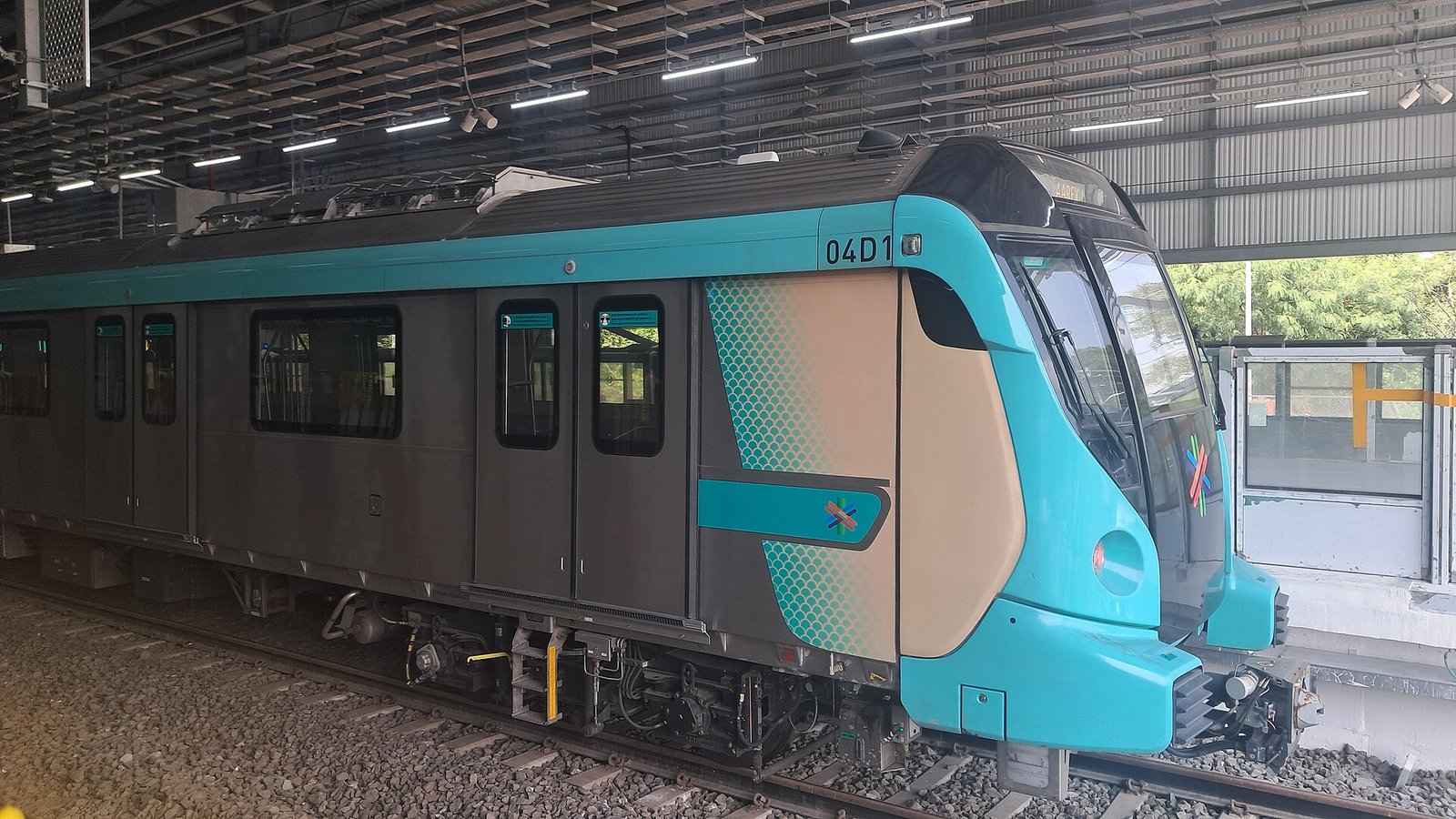
    Mumbai’s full 33.5-kilometre Metro Line 3 corridor entered public service on 9 October 2025, extending journeys between Aarey JVLR and Cuffe Parade after the final southern section was inaugurated a day earlier. The opening made the complete north–south route available to passengers. First-day usage figures and reports of operational difficulties remained early observations rather than a settled assessment of the service.

    The missing southern section joined the operating route

    JICA’s 9 October release described the final section from Acharya Atre Chowk to Cuffe Parade as adding 11 stations. Across the whole corridor, it listed 27 stations: 26 underground and one above ground. Calling every station underground would therefore be inaccurate, even though the project is widely associated with underground construction.

    The Japanese development agency identified its official development assistance as part of the project’s financing. That establishes an international public-finance role in the infrastructure, rather than a private service launch detached from government investment.

    Opening-day demand came with practical complaints

    PTI reported through The Week that Mumbai Metro Rail Corporation recorded 118,286 passengers by 7 pm on 9 October. That was a time-specific checkpoint. It should not be described as the final full-day total or projected automatically into a year’s ridership.

    The same account described queues and complaints about ticket-vending machines, escalators and mobile connectivity at some locations. These were reported opening-day experiences, not proof that every station had the same fault. Conversely, a large passenger count did not mean every passenger encountered a smooth journey.

    The operational questions are concrete: whether tickets can be obtained reliably, passengers can move through stations, and information helps people complete their trips. The opening establishes availability of the whole route; performance requires continuing observation of the service actually delivered.

    What the new connection can and cannot establish

    An end-to-end corridor gives passengers a new public transport option across Mumbai. Whether it reduces an individual journey’s time depends on station access, waiting, interchange and the distance from the destination. A projected travel-time saving should not be presented as a measured result for every commuter.

    Similarly, the project’s contribution to traffic and environmental goals would need evidence about sustained use and changes in travel behaviour. Those outcomes cannot be established from the inauguration ceremony or a single evening’s count alone.

    At this archive cut-off, the verified development was the start of full-corridor public operations following the final section’s inauguration. The report retains the opening-day passenger checkpoint and attributed service complaints, without importing later ridership, timetable changes or claims about long-term benefits into the October 2025 record.

    Quick answers

    When did the complete corridor open to passengers?

    Public services on the full route began on 9 October 2025, after the final section’s inauguration on 8 October.

    Were all 27 stations underground?

    No. JICA listed 26 underground stations and one above-ground station.

    Was 118,286 the final opening-day total?

    No. PTI reported that count as the position by 7 pm.

    Sources and archive context

    JICA, 9 October 2025: final section inauguration, corridor and financing context

    PTI / The Week, 9 October 2025: full operations, passenger checkpoint and service complaints

    This report records the position at the stated historical publication date. Proposals, allegations and anticipated events are not presented as final outcomes.

    More Mumbai political news · IndianVoter newsroom

    Image source

    A Metro Line 3 train at Aarey station photographed on 6 October 2024. Archive photograph from the earlier operating stage; not the October 2025 southern-extension opening. Photo: Historical Trains / Wikimedia Commons original file page · CC0. Resized where applicable; display crops may be applied. The photograph remains under the linked licence.

  • Mumbai monsoon-shelter gap draws scrutiny despite civic emergency arrangements

    Mumbai monsoon-shelter gap draws scrutiny despite civic emergency arrangements

    Archive report · 2025-08-24

    Mumbai’s heavy rain exposed a dispute over whether civic shelter arrangements met the needs of people living on the streets, according to an August 2025 report. A state-level monitoring committee distinguished emergency spaces for stranded or rescued people from temporary monsoon shelters for the homeless. The BMC said it had existing homes and was working to create more.

    Why did the shelter count not settle the issue?

    The Indian Express reported the BMC’s figure of 23 homes but said many catered to specific populations rather than providing easy temporary access during rain. The administration’s planning director, Prachi Jambhekar, said the homes followed the relevant programme and that expansion was underway.

    Committee chair Ujjwal Uke argued that schools used during emergencies were not the same as readily accessible seasonal shelter for people who routinely slept outdoors. The disagreement concerned suitability and access, not simply whether any covered civic building existed.

    A facility must match the need it is counted against

    A home restricted to a particular group can provide a valuable service while being unavailable to someone outside that group. Likewise, a school opened during a rescue operation may not function as a place a person can enter voluntarily throughout the monsoon. Combining these categories can make a total appear more comprehensive than the service offered.

    An informative public register would therefore identify who each facility serves, when it is open and how entry works. Capacity and actual accessibility would need to be shown together. A nominal bed total does not establish that a family seeking short-term cover can use it.

    The accountability question is seasonal readiness

    The committee’s concern, as reported, was that the need was foreseeable before heavy rain arrived. The useful planning record would show arrangements made before the season, the facilities actually opened and the people able to use them. That would distinguish a standing preparedness plan from an improvised emergency response.

    This article does not identify vulnerable individuals or infer their circumstances from an archive photograph. It reports the institutional debate about access to shelter and the administration’s response.

    The date is deliberately preserved as August 2025. No later shelter opening or closure is imported into this account, and the historical total is not presented as Mumbai’s current capacity. A current assessment would require a later, facility-wise record.

    Quick answers

    Were emergency schools necessarily homeless shelters?

    The monitoring committee said these served different needs and should not be treated as interchangeable.

    Did the BMC say it had no homes at all?

    No. It reported existing homes and said more were being developed.

    Is the August 2025 count a current capacity figure?

    No. This is a historical report with a fixed archive date.

    Sources and archive context

    The Indian Express, 23–24 August 2025: committee concerns, shelter categories and civic response

    This report records the position at the stated historical publication date. Proposals, allegations and anticipated events are not presented as final outcomes.

    More Mumbai political news · IndianVoter newsroom

    Image source

    Rain in Mumbai photographed on 7 June 2013. Archive weather photograph; it does not identify homeless residents or establish shelter availability during August 2025. Photo: Mack Male from Edmonton, AB, Canada / Wikimedia Commons original file page · CC BY-SA 2.0. Resized where applicable; display crops may be applied. The photograph remains under the linked licence.