The opposition’s symbolic hearing against CEC Gyanesh Kumar and its planned Ramlila Maidan rally are two different events. Rain moved the first programme from 30 to 31 October 2026; the rally was announced for 1 November. Here is how the sequence fits together, without treating a future programme as an accomplished event.
Friday, 30 October: the hearing is postponed
Deccan Herald reported that opposition leaders decided to postpone Friday’s programme because of rain in Delhi. Rahul Gandhi said the decision was taken by consensus, citing the discomfort that sitting in the rain would cause senior participants. NDTV’s postponement report also identified bad weather as the reason for the change.
This establishes why the event moved. It does not establish that the political campaign was called off. Readers seeing an older headline about postponement should check the date before assuming it describes the status of the Saturday programme.
There is another distinction worth preserving: the logistical explanation is a reported statement by the organisers. It should not be expanded into an unsupported claim about attendance, a security refusal or a cancellation of the following day’s rally.
Saturday, 31 October: proceedings begin at the residence
The Hindu’s live page recorded the opening proceedings shortly after 4 p.m. on Saturday. Its subsequent updates recorded Kharge’s address at the hearing.
Advance notices and live reports perform different jobs. An announced start time tells participants what organisers planned. A timestamped report of the opening describes what was observed later. Where schedules change, the opening report is the stronger basis for saying the event has actually started. This timeline therefore uses the confirmed afternoon opening rather than presenting an earlier timetable as a guarantee.
Sunday, 1 November: a separate rally is planned
The Hindu reported that the opposition planned a Chalo Dilli march and a rally at Ramlila Maidan on 1 November. The residence hearing and the rally share a political campaign, but they have different settings and formats. A photograph from one should not automatically be labelled as showing the other.
At this article’s cut-off, 1 November was still in the future. The accurate description is “planned” or “announced”. The existence of an announcement does not establish that the march took place, how many people attended, or what leaders ultimately said there.
Readers intending to travel should check the latest organiser notice and an official Delhi Traffic Police advisory. This article is a reporting timeline, not a live road-closure or public-transport advisory. It does not reproduce an unverified route as travel guidance.
What the dates do not tell us
The sequence of events does not resolve the opposition’s allegations about electoral rolls. Those require their own evidence. Equally, a hearing styled as “public impeachment” does not acquire legal removal powers because it is held before a large rally. The programme’s political name and its constitutional effect remain separate questions.
A useful way to assess subsequent updates is to ask what new record they add. An organiser’s announcement establishes an intention. A reporter’s account can establish that proceedings began. A complete recording or published resolution may establish what was said or adopted. A legal change in the CEC’s position would require an entirely different official record.
How this timeline should be updated
A follow-up should identify the actual conclusion of the hearing, link any full resolution, and separately verify the status of the 1 November programme. Crowd estimates and claims of obstruction should be attributed and supported by a stated method or documentary evidence. Neither a political prediction nor a promotional poster is a substitute for an observed outcome.
Frequently asked questions
Why was the original programme postponed?
The organisers cited rain and the discomfort it would cause senior participants, according to the 30 October reports.
Were the hearing and Ramlila rally the same event?
No. The hearing was held at Kharge’s residence on 31 October. The Ramlila Maidan rally was separately planned for 1 November.
Did the planned rally already happen at this report’s cut-off?
No. This account closes at 4:40 p.m. IST on 31 October and treats the next day’s programme as an announcement.
Reporting cut-off: 31 October 2026, 4:40 p.m. IST. This article distinguishes reported developments, political allegations and the applicable legal framework. It does not report a final outcome of the symbolic hearing.
Image source
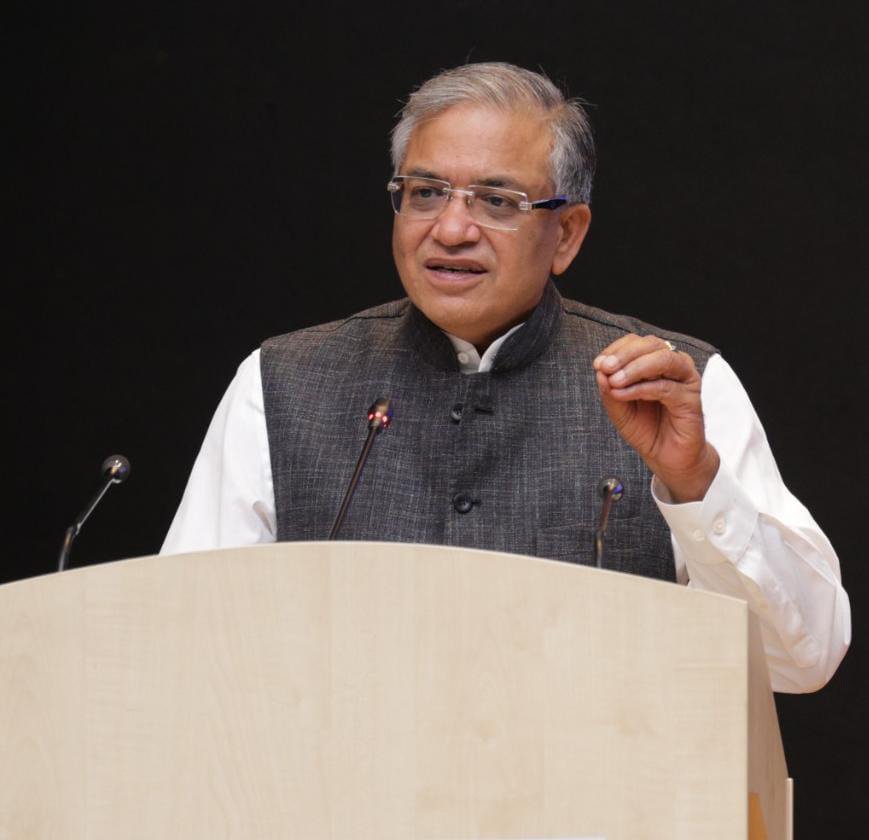
Mallikarjun Kharge addressing the Indian Labour Conference in New Delhi on 14 February 2012. Archive photograph; not the October 2026 hearing or rally. Photo: Ministry of Labour and Employment / Wikimedia Commons · GODL-India. Display crops may be applied.
The INDIA bloc held a symbolic “public impeachment” hearing against Chief Election Commissioner Gyanesh Kumar at Congress president Mallikarjun Kharge’s residence in New Delhi on 31 October 2026. Kharge sought Kumar’s removal, while BJP leaders rejected the exercise and defended electoral-roll revision. The gathering was a political hearing: it did not itself remove the CEC, establish a criminal offence or replace the constitutional process.
This report brings together the linked live coverage from The Hindu, The Economic Times and India Today, alongside the Election Commission’s published position and the relevant legal provisions. The reporting cut-off is 5:50 p.m. IST on 31 October. Developments after that point are not treated as confirmed here.
Where was the hearing held, and who led it?
The venue was 10 Rajaji Marg, Kharge’s official residence in New Delhi. Former Lok Sabha Speaker Meira Kumar presided, and Kharge moved the symbolic motion. The Economic Times reported the programme underway around 4 p.m.; other live blogs recorded its opening at slightly different posting times. Those timestamps identify when an outlet published an update, rather than providing an independently synchronised transcript.
The organisers used a parliamentary-style format to present their objections to the Chief Election Commissioner’s conduct. Calling the meeting an impeachment did not make it a sitting of either House. An MP’s participation, or a former Speaker’s presence in the chair, does not transfer Parliament’s statutory powers to a gathering at a residence.
Watch the organisers’ broadcast
The video below is the broadcast titled “LIVE: The Public Impeachment of Gyanesh Kumar | 10 Rajaji Marg, New Delhi”, published on Rahul Gandhi’s YouTube channel. It provides the organisers’ presentation of the proceedings. Statements made in the broadcast should be assessed as the speakers’ claims, with the responses and legal context set out in this report.
The Hindu’s live coverage reported a six-part set of allegations displayed at the programme. In summary, the opposition accused Kumar of enabling election manipulation; overseeing large-scale removals from electoral rolls; changing requirements associated with Form 6 without parliamentary approval; centralising control through ECINet; excluding the other Election Commissioners from decisions; and acting under political instructions from the Prime Minister and Home Minister.
These are the opposition’s charges. This report has not independently established them as findings of fact. The allegations also concern different kinds of evidence: individual voter records, the legal authority for forms, software permissions and internal institutional decisions. A single political label does not resolve all of those questions.
Claims about the number of voters affected require particular care. A count of entries classified as absent, shifted, dead or duplicate is not automatically a count of eligible citizens unlawfully disenfranchised. Draft-stage omissions, final deletions, reinstatements and successful applications can describe different stages of the same revision. The source data and the decisions on individual cases are needed to evaluate a numerical claim.
What did Kharge demand?
India Today reported that Kharge demanded Kumar’s immediate removal and called for a treason trial. It also reported his criticism of the protections contained in the 2023 Election Commissioners law. The demand for prosecution was a political demand made at the hearing, not a report that a court had convicted Kumar or that such a trial had begun.
Kharge’s stated argument was that electoral administration should protect the voting rights of legitimate electors. His assertion that the CEC had acted under political direction remains an allegation. The seriousness of that assertion makes the underlying orders, decision records and the Commission’s response essential to any assessment of it.
Why are SIR, Form 6 and ECINet central to the dispute?
Special Intensive Revision, or SIR, concerns the checking and updating of electoral rolls. Form 6 is the application route identified by the Election Commission for new registration. ECINet is the digital system discussed in the Commission’s published account of document handling and official access. The dispute concerns how these administrative mechanisms have been designed and used, rather than simply whether voter lists should ever be updated.
For a voter whose entry is contested, the meaningful record is specific: the earlier roll entry, any verification or notice, the application or objection, the registration officer’s decision and any available appeal. A general claim about a nationwide exercise cannot establish the status of an individual elector. Equally, a general institutional assurance does not answer every documented complaint.
What is the Election Commission’s published position?
In a press note dated 26 September 2026, before this hearing, the Commission said the SIR orders described in that note had unanimous approval. It described role-based access to ECINet and said documents collected by Booth Level Officers would be uploaded for decisions by Electoral Registration Officers. It also announced a review of ECINet’s compliance with the applicable laws and rules.
That press note is relevant institutional context. It is not a newly issued response to every statement made at the 31 October programme. Its publication also should not be reported as an independent judicial finding about each disputed voter entry. A fair assessment should compare a particular allegation with the particular record or explanation that addresses it.
How did the BJP respond?
The Economic Times reported that BJP spokesperson Guru Prakash Paswan accused the opposition of spreading misleading narratives through the exercise. The party’s response contested both the programme’s political framing and the allegation that the revision was being used for electoral manipulation.
The Hindu reported that BJP MP Sambit Patra defended Form 6 and urged people whose names were missing to apply for inclusion. He said an additional declaration was involved while the form itself remained unchanged. That is the BJP’s position on a disputed issue; it should not be confused with the text of a particular rule or a decision on an individual application.
Patra also criticised the event as a misuse of parliamentary symbolism. The central disagreement therefore has two levels: the opposition is demanding accountability for the conduct of electoral administration, while the BJP disputes its claims and the legitimacy of the chosen political spectacle. Neither side’s assertion substitutes for verification of the underlying electoral records.
What did other opposition leaders say?
The Hindu reported that RJD leader Tejashwi Yadav accused the CEC of acting in the BJP’s interests, while TMC MP Saugata Roy said the opposition had followed the procedure for submitting a removal notice but had not been allowed to raise the issue in Parliament. Those accounts establish the positions they expressed, rather than proving the allegations themselves.
India Today reported Shashi Tharoor’s explanation that the programme had been organised outside Parliament because the opposition’s notices had not been admitted by the presiding officers. The distinction between submitting a notice and having it admitted is significant: the first is an initiative by members, while the second is a separate procedural decision. Neither stage by itself constitutes removal.
Can this hearing legally remove the Chief Election Commissioner?
No. Article 324(5) of the Constitution protects the CEC through the removal standard applicable to a Supreme Court judge. Article 124(4) requires the prescribed support in each House of Parliament and a presidential order on the specified grounds. The required support combines a majority of the House’s total membership with at least two-thirds of members present and voting.
Section 11 of the 2023 Act retains the CEC’s removal safeguard. Section 16 separately addresses civil or criminal proceedings concerning acts, things or words done or spoken when acting, or purporting to act, in official duty. The scope and validity of a legal protection are questions for the applicable law and courts; a political description of a lifelong shield is not the complete statutory text.
A public resolution can demand action and seek to influence opinion. It cannot itself exercise the powers assigned to Parliament, the President or a court. A reported demand for removal, prosecution or resignation should therefore remain clearly distinguished from a completed legal outcome.
What happens to the November 1 rally?
The linked reports describe a separate opposition programme planned for Ramlila Maidan on 1 November. The residence hearing and the rally belong to the same political campaign, but they are different events. At this report’s cut-off, the next day’s rally was still a planned programme, not an event whose attendance or outcome could be reported as completed.
Any later report should verify the final arrangements, what actually took place and any official traffic instructions. This article does not present a political attendance forecast as a measured crowd total or reproduce an unverified route as travel guidance.
What should voters check for themselves?
Use the Election Commission’s official electoral-search service to verify your current roll entry. If an entry is missing or wrong, keep the application reference, notice and any written decision, and consult the relevant Electoral Registration Officer or Booth Level Officer. The official Voters’ Service Portal identifies the current forms and application routes.
The ECI’s guidance distinguishes Form 6 for new registration, Form 7 for objections or deletion requests, and Form 8 for corrections, shifting residence and specified voter-card services. Check the current instructions and the applicable local schedule rather than assuming that a deadline reported for another state applies to you.
Frequently asked questions
Was Gyanesh Kumar removed by the public impeachment programme?
No legal removal is established by the linked reports. The programme was a symbolic political hearing, while actual removal requires the constitutional process.
Who chaired the hearing and moved the motion?
Former Lok Sabha Speaker Meira Kumar presided. Congress president Mallikarjun Kharge moved the symbolic motion at his residence at 10 Rajaji Marg, New Delhi.
Did a court find the CEC guilty of treason at this event?
No. Kharge’s reported call for a trial was a demand by a political leader. It was not a court judgment or proof that proceedings had begun.
Where can the full broadcast be watched?
The YouTube video embedded in this report is the organisers’ broadcast on Rahul Gandhi’s channel. A direct link is also provided below it.
Are the hearing and the November 1 Ramlila Maidan rally the same event?
No. They are separate programmes. This report records the hearing on 31 October and describes the following day’s rally as planned at its reporting cut-off.
Reporting cut-off: 31 October 2026, 5:50 p.m. IST. Original synthesis of the linked reporting and official sources; not an independent transcript or a finding on the allegations.
Image source
Gyanesh Kumar in June 2025. Archive photograph; not the 31 October 2026 opposition hearing. Photo: Prime Minister's Office / Wikimedia Commons · GODL-India. Display crops may be applied.
The Bombay High Court pressed the BMC to demonstrate its work against Mumbai’s air pollution during a hearing on 30 October 2026. The Times of India reported the remarks in proceedings on Vanashakti’s interim application in a continuing public-interest case. The hearing was adjourned; the report did not establish a final decision resolving every issue raised.
What did the parties put before the court?
The newspaper identified the bench as Justices Ajey Gadkari and Kamal Khata. Vanashakti’s counsel raised concern about particulate pollution and additional emissions around Diwali. The state referred to directions in a separate firecracker matter, while the NGO said the broader case covered other pollution sources.
The BMC’s counsel objected that the NGO was already before a court-constituted high-powered committee. The account said the judges expected the corporation to perform its duty and show results, and listed the next hearing for 30 November. That was the reported procedural position, not a finding of criminal liability or a new blanket ban.
Remarks, submissions and orders need distinction
An advocate’s account of pollution is a submission to the court. A judge’s observation during a hearing is important to report, but it should not automatically be rewritten as a detailed operative direction that the available account does not reproduce. The terms of any binding order need their own text.
This is also a different development from a civic publicity campaign or a request to publish sensor data. Those concern specific administrative initiatives. This story concerns judicial scrutiny of the corporation’s response and the positions taken in the proceeding.
Showing work requires more than an assurance
The records that would make implementation assessable include dated inspections, action taken and evidence of compliance at the sources targeted. Ambient measurements would separately help evaluate conditions over time. Announcing an enforcement drive does not itself establish its effect on pollution, just as a single reading cannot attribute the city’s problem to one source.
At this archive cut-off, the confirmed event was the hearing, the reported observations and the adjournment. No later order or outcome of the next hearing is assumed. The article does not offer a medical assessment or claim that the court had finally decided each contested factual allegation.
Quick answers
Was there a final ruling on all the pollution allegations?
No such final resolution was established by the cited hearing report.
What did the BMC object to procedurally?
Its counsel said the NGO was already before a court-constituted committee.
Was the next hearing already completed?
No. The report recorded 30 November as a future listing.
This report records the position at the stated historical publication date. Proposals, allegations and anticipated events are not presented as final outcomes.
The Bombay High Court building photographed on 9 June 2018. Archive institutional photograph; not the October 2026 hearing. Photo: Pinakpani / Wikimedia Commons original file page · CC BY-SA 4.0. Resized where applicable; display crops may be applied. The photograph remains under the linked licence.
Teachers, parents, parishioners and residents planned a protest over access to Our Lady of Good Counsel Church and High School in Sion, according to a 30 October 2026 report. They said the reconstructed road overbridge obstructed the main compound entrance. A civic bridges official explained that the approach had to rise to meet railway clearance requirements.
What did the community report?
The Times of India quoted parishioner Gladys D’Souza and school and church manager Tony D’Souza describing blocked vehicle access and reliance on a smaller side entrance. They raised concerns about school buses and emergency vehicles. The report put the school’s enrolment at around 3,500.
The same account recorded the official explanation that a higher railway bridge level required the approach to be raised. That explains the stated engineering constraint; it does not itself demonstrate that the compound’s access problem had been resolved. The cited account did not establish an implemented remedy.
A bridge and its neighbouring entrances form one access problem
An infrastructure project can meet a clearance requirement while creating a difficult interface with an adjoining property. Evaluating this case therefore requires both the bridge drawing and the entrance arrangement, rather than treating either one in isolation. This report does not independently determine an engineering failure from residents’ statements alone.
The practical questions are specific: where vehicles can stop, which entrance can accommodate them and how an emergency route would work. A proposed solution would become assessable through a drawing, an on-site check and confirmation of which authority would deliver it. A general assurance of improved connectivity would not answer those access questions.
The planned protest was a request for civic attention, rather than evidence that a final design change had been approved. At this archive cut-off, the event remained anticipated in the cited account. No subsequent protest attendance, agreement or completed alteration is assumed.
The story concerns the relationship between major transport construction and everyday access to a local institution. The confirmed development is the community’s reported objection and the administration’s explanation; both need to remain visible in the record.
Quick answers
Had a remedy already been implemented?
No implemented solution was established in the cited report.
Why did the civic official say the bridge level increased?
To meet railway clearance requirements, which also required a higher approach.
Was the planned protest already a verified completed event?
No. This historical account records it as planned at the reporting cut-off.
This report records the position at the stated historical publication date. Proposals, allegations and anticipated events are not presented as final outcomes.
A bridge between Sion and Dharavi photographed on 13 October 2009. Archive area photograph; not the reconstructed Sion road overbridge or the school entrance described in the report. Photo: urbzoo / Wikimedia Commons original file page · CC BY 2.0. Resized where applicable; display crops may be applied. The photograph remains under the linked licence.
BJP representatives Gopal Shetty and Ganesh Khankar questioned the BMC’s use of 225-square-foot homes for project-affected people and sought parity with the larger homes offered under other arrangements. Reports on 30–31 October 2026 recorded their objections and a promised further discussion. They did not establish that the municipal policy had already changed to 300 square feet.
What was being challenged?
The Times of India linked the dispute to a 2025 BMC circular. Shetty and Khankar objected to the smaller area and contrasted it with 300-square-foot accommodation under other state agencies. The Free Press Journal similarly reported their demand for relief and an examination of the policy.
Shetty said civic officials had accepted the concern in principle and that the matter would go before a group leaders’ meeting with the municipal commissioner. This is an attributed account of discussions. Acceptance of an argument in a meeting is different from a formally issued revision, and no final operative amendment is established by the cited reports.
Why the agency distinction matters
“Project-affected person” describes a circumstance, but it does not by itself identify the governing rehabilitation scheme. A household affected by one authority’s project may be considered under a different policy from a household affected by another. Comparing the size of homes can reveal a political fairness question without demonstrating that the legal or administrative terms are identical.
The reported difference between 225 and 300 square feet is therefore the starting point of the dispute. A complete comparison would also need the category of beneficiary, the way floor area is measured and the applicable costs and conditions. This article does not infer an individual family’s eligibility from a general political demand.
What would establish an actual change?
A revised circular, an approved resolution or another operative order would show the decision, effective date and people covered. It would also clarify whether a change applied to future allotments, pending cases or previously allotted homes. Without that record, a claim that everyone had already acquired a larger entitlement would run ahead of the evidence.
For Mumbai residents displaced by public projects, the practical issue is the accommodation eventually offered and the written basis for it. The representatives’ intervention brings that issue back into political debate. At this archive cut-off, however, the confirmed development was a challenge to the policy and an anticipated decision-making process. The demand, any recommendation and a final implemented rule must remain separate stages in the public record.
Quick answers
Had 300-square-foot homes been approved for everyone?
That outcome was not established by the cited October reports.
Who raised the objections?
Gopal Shetty and Ganesh Khankar, according to both accounts.
What record would confirm a policy revision?
An operative civic order or revised circular specifying its scope and effective date.
This report records the position at the stated historical publication date. Proposals, allegations and anticipated events are not presented as final outcomes.
Dharavi, Mumbai, photographed on 9 February 2010. Archive neighbourhood photograph; it does not identify project-affected beneficiaries or their rehabilitation eligibility. Photo: Leonora Enking / Wikimedia Commons original file page · CC BY-SA 2.0. Resized where applicable; display crops may be applied. The photograph remains under the linked licence.
Awaaz Foundation asked the BMC to make construction-site air-monitor data openly accessible, arguing that residents needed to see both readings and maintenance records. The request, reported on 30 October 2026, followed the group’s criticism of display-board readings at sites in Bandra and Khar. The civic body had said these monitors served a different purpose from ambient air-quality stations.
What information did the foundation seek?
The Times of India reported a 28 October letter from the foundation, led by Sumaira Abdulali. It sought a dedicated public source for live readings, calibration information, faults, repairs and enforcement. The group also pointed to performance requirements it said were contained in the BMC’s November 2025 operating procedure.
Those requirements were the foundation’s account of the procedure in the cited report. This article has not independently audited every installed sensor or established that every site breached a condition. A demand for transparency is evidence of a policy dispute, rather than proof of citywide non-compliance.
Why the display readings were questioned
Mid-day’s 26 October report described the foundation’s checks at a small group of Bandra and Khar construction sites over 38 days. The group said it found discrepancies, including displays showing zero particulate readings. Those observations concern the locations and periods examined; they should not be extrapolated into a measured failure rate for all Mumbai sites.
In the same account, BMC environment official Avinash Dhakne said site sensors were intended to identify local hotspots and were not directly comparable with ambient AQI monitoring stations. The report also described the civic body’s position on repairs and its dashboard. This response does not remove the value of checking a faulty display, but it does matter when deciding which comparisons are technically meaningful.
Data access and data interpretation are linked
A public dashboard is most useful when a reader can identify the instrument, location, pollutant, measurement period and whether a value is missing or valid. A zero, an offline unit and a low pollution reading are different states. Showing them in the same way can make a number appear more reassuring than the underlying record supports.
Calibration and maintenance logs would allow a more precise discussion than a photograph of one board alone. They could distinguish an isolated fault from a recurring operational problem. The unresolved question at this cut-off was how much reliable site-level information the public could inspect and how the administration would respond to the foundation’s request. The report makes no individual medical assessment and does not treat a construction-site display as a complete measure of neighbourhood exposure.
Quick answers
Did the foundation audit every Mumbai site?
No. The cited field observations concerned a limited group of sites and specified periods.
Why did the BMC contest direct comparisons?
Its official said construction-site sensors identify local hotspots and differ from ambient AQI stations.
What additional records were requested?
Public readings together with calibration, fault, repair and enforcement information.
This report records the position at the stated historical publication date. Proposals, allegations and anticipated events are not presented as final outcomes.
Construction of the Bandra-Worli Sea Link photographed on 28 December 2007. Archive infrastructure photograph; not one of the sites monitored by Awaaz Foundation in 2026 and not evidence of its emissions. Photo: Sadanand Warty / Wikimedia Commons original file page · CC BY 3.0. Resized where applicable; display crops may be applied. The photograph remains under the linked licence.
BEST’s ₹33,000 Diwali ex-gratia announcement on 30 October 2026 brought a dispute over political credit and procedure alongside the payment itself. The undertaking said 22,654 employees would receive the amount on 3 November, at a reported total cost of about ₹75 crore. The scheduled payment was not evidence that employees’ accounts had already been credited.
How did the announcement become contested?
The Times of India reported that BJP leader Prasad Lad met BEST general manager Sonia Sethi and publicly announced the amount earlier in the day. He attributed it to discussions with chief minister Devendra Fadnavis and follow-up with the administration.
BEST Committee chairperson Trushna Vishwasrao of the Shinde-led Shiv Sena objected to bypassing the usual announcement procedure and later formally announced the benefit. Shiv Sena (UBT) committee member Nitin Nandgaonkar also said the committee chair should make the official declaration. This was a reported dispute about process and credit; it did not establish that the benefit had been withdrawn.
What did the formal announcement say?
The Free Press Journal reported the same ₹33,000 amount, the 22,654-employee coverage and the 3 November timetable. It said the bonus was ₹2,000 higher than the previous year and attributed the announcement to Vishwasrao. Her statement credited both Fadnavis and deputy chief minister Eknath Shinde.
Multiplying 22,654 by ₹33,000 produces approximately ₹74.76 crore, consistent with the rounded ₹75-crore figure. The rounded total should not be treated as a separate additional payment. The account also needs to remain distinct from the BMC’s own employee-bonus announcement: BEST has its own workforce and decision process.
Payment and political credit require different evidence
For employees, the practical outcome is whether the approved amount reaches eligible accounts on the announced date. For political accountability, the questions concern how the benefit was authorised and communicated. A disagreement over the second question does not answer the first.
The implementation record would show the approval, coverage and actual disbursement. It would also clarify any exceptions without relying on broad headlines. This report does not determine individual eligibility or assume that every payroll transaction was completed.
At the archive cut-off, the confirmed development was the formal bonus announcement and the competing claims surrounding it. No later payment result, settlement between parties or wider alliance change is implied.
Quick answers
Was the bonus payment already verified on 30 October?
No. The announced credit date was 3 November.
Did the dispute mean the bonus was cancelled?
The cited accounts did not report a cancellation.
Is this the same workforce as the BMC bonus story?
No. This article concerns BEST employees and the undertaking’s own announcement.
This report records the position at the stated historical publication date. Proposals, allegations and anticipated events are not presented as final outcomes.
The preserved BEST bus Sangrahika at the BEST Museum, Anik Bus Depot, photographed on 31 July 2025. Archive institutional photograph; not a bonus announcement or payment event. Photo: Rajendra B. Aklekar / Wikimedia Commons original file page · CC BY-SA 4.0. Resized where applicable; display crops may be applied. The photograph remains under the linked licence.
A dispute over assistance to farmers affected by Cyclone Arnab has become a point of confrontation between Andhra Pradesh’s government and the opposition YSR Congress Party. Former chief minister Y. S. Jagan Mohan Reddy criticised the Chandrababu Naidu administration’s response, while the government pointed to a preliminary damage assessment and a request for central help.
Competing accounts of relief
Reddy questioned the pace of support and the method of recording crop damage, according to an NDTV report published on 30 October. These are allegations made by an opposition leader; they should not be treated as independently established findings about every affected district or farmer.
Agriculture Minister Kinjarapu Atchannaidu, in the same reporting, cited an initial assessment of damage and said the state had sought assistance from the Union government. A preliminary estimate can guide an immediate request, but final compensation decisions depend on field verification, eligibility and the rules governing relief.
What farmers need to know
The political disagreement turns on two practical questions: how losses are counted and when assistance reaches households. Farmers need clear instructions for reporting damage, a transparent assessment timetable and an explanation of the amount and source of any payment. The opposition’s criticism and the minister’s account should be tested against district reports and disbursement records as they become available.
IndianVoter will follow official assessments and payments. This article records the positions reported on 30 October 2026; it does not establish the final damage total or that all requested central support has been approved.
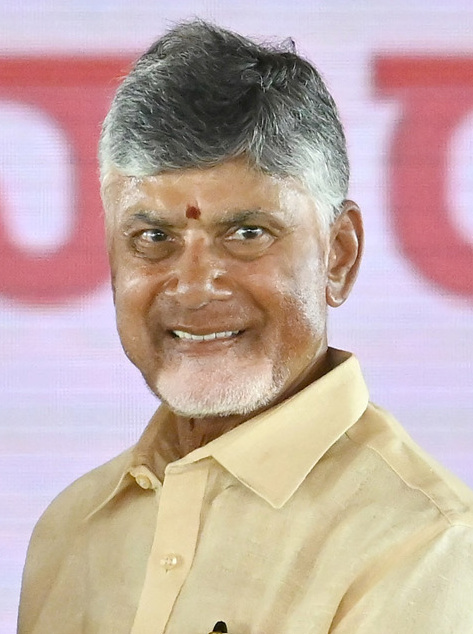
N. Chandrababu Naidu. Archive portrait; not cyclone damage or relief operations. Photo: Prime Minister's Office / Wikimedia Commons · GODL-India. Display crops may be applied.
A Delhi traders’ group asked Congress leader Sonia Gandhi to postpone an opposition rally planned for 1 November at Ramlila Maidan, saying the event could disrupt market access during the Diwali shopping period. The Chamber of Trade and Industry set out its request in a report carried on 30 October.
The traders’ request
The group said road restrictions and a large gathering near the venue could affect customers, deliveries and trading activity. Its estimates of possible losses are the group’s own claims, not independently established figures. The request was directed at the rally organisers; it was not an official order to cancel or reschedule the gathering.
Ramlila Maidan is a recurring venue for major political meetings. When events there coincide with busy shopping days, local businesses can seek clearer traffic plans or a different date. Organisers also have a right to hold political meetings subject to applicable permissions and arrangements. The practical impact depends on the eventual crowd, police advisories and market access measures.
What is confirmed
As of the 30 October report, the confirmed development was the trade body’s request. There was no confirmation in that report that the Congress had accepted a postponement. Residents and traders should rely on later statements from organisers and Delhi traffic police for the actual schedule and diversions.
IndianVoter will update this report if an official decision changes the event arrangements. This article is dated to the publication of the request, 30 October 2026.
Rajagopal at Ramlila Maidan during the separate Janadesh gathering in 2007. Archive venue photograph; not the planned 2026 rally. Photo: Ekta Parishad / Wikimedia Commons · CC BY-SA 3.0. Display crops may be applied.
Devendra Fadnavis, Uddhav Thackeray and Raj Thackeray shared a stage at a Dadar book launch on 29 October 2026, trading jokes while celebrating Marathi political cartoons. Fadnavis also expressed willingness to help establish a cartoonists’ gallery in Mumbai. The public appearance confirmed a cultural meeting between political rivals, rather than a new governing arrangement.
A cultural occasion with political attention
NDTV located the launch at Savarkar Smarak in Dadar and identified senior cartoonist Prashant Kulkarni’s compilation as the occasion. Maharashtra culture minister Ashish Shelar was also present. The light-hearted exchanges attracted attention because of the leaders’ political differences, but the reported remarks centred on art, cartoons and their relationships.
PTI’s account, carried by The Week, described a collection documenting 75 cartoonists and roughly a century of cartooning. Fadnavis said cross-party conversation belonged to Maharashtra’s political tradition. He congratulated Kulkarni and publisher Granthali for preserving the drawings with historical context.
A gallery idea, not an inaugurated institution
The chief minister said he would take an initiative for a dedicated cartoon gallery and seek the Thackerays’ support. That is a statement of intent. The cited reporting did not establish a sanctioned site, budget, completion date or opening. Uddhav separately said the Bal Thackeray memorial would include his father’s cartoons; it should not automatically be merged with the gallery proposal.
Raj recalled his own early cartooning, while the discussion included jokes about the politicians as subjects of caricature. The exchange illustrates why this particular gathering belongs in Mumbai’s political record: political criticism through visual art was being discussed by people who are themselves frequent subjects of it.
How much can be read into the shared stage?
A common platform establishes that the leaders attended the same event. It does not, on its own, establish negotiations, a seat-sharing formula or an agreement to replace an ally. Such conclusions would require explicit statements or documentary evidence beyond cordial photographs and humour.
The clearest civic follow-up is the proposed public gallery. A subsequent administrative record could show whether the suggestion acquired a location, funding and a curator’s mandate. Until then, the archive preserves the promise at the level at which it was made. It does not turn an evening’s political speculation into a settled outcome.
Quick answers
Was a new alliance announced?
The cited accounts did not establish a coalition or seat-sharing announcement.
Where did the event take place?
At Savarkar Smarak in Dadar, Mumbai.
Was the cartoon gallery already open?
No. Fadnavis expressed support for taking the idea forward; an opening was not established.
This report records the position at the stated historical publication date. Proposals, allegations and anticipated events are not presented as final outcomes.
Devendra Fadnavis photographed during an official meeting in New Delhi on 17 January 2015. Archive portrait; not the October 2026 Dadar book launch. Photo: Ministry of Consumer Affairs, Food and Public Distribution / Wikimedia Commons original file page · GODL-India. Resized where applicable; display crops may be applied. The photograph remains under the linked licence.